Teaching with Technology
  • Intro
    • Essential Skills
  • Learning Environment
    • Setting Objectives and Providing Feedback >
      • Classroom Webpages
      • Response Systems and Polls
      • More Feedback Ideas
    • Cooperative Learning >
      • Class Learning Networks
      • Global Collaboration Projects
    • Reinforcing Effort and Providing Recognition >
      • Data Collection and Analysis
  • Developing Understanding
    • Cues, Questions and Advance Organizers
    • Nonlinguistic Representations >
      • Infographics
      • Mind Mapping
    • Summarizing and Note-Taking >
      • Discussion Forums
      • Screen Capture and Screen Casting
      • Digital Note Taking Tools
      • Social Bookmarking Tools
    • Homework and Practice >
      • Flipped Classroom
      • Practice Sites
      • TED-Ed
  • Extending and Applying Knowledge
    • Identifying Similarities and Differences
    • Generating and Testing Hypotheses
    • More Ideas

Helping Students Develop Understanding:
Nonlinguistic Representations
Picture


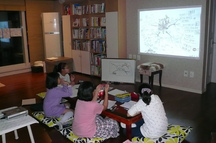
We store knowledge in two different forms: a linguistic form and an imagery form. Using both forms increases our ability to think about and recall knowledge. Studies have shown that teachers tend to focus on the use of  linguistic representations to present new information. The use of  nonlinguistic representations will help students increase knowledge with mental images.


The use of nonlinguistic representations in the classroom may include:
- creating graphic representations through organizers
- making physical models
- generating mental pictures
- drawing pictures and pictographs
- engaging in kinesthetic activities

Infographics
Mind Mapping
Proudly powered by Weebly
Photo used under Creative Commons from Jinho.Jung