Cues, Questions, and Advance Organizers
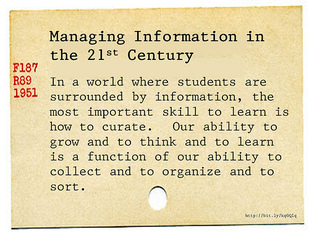 Slide_CurateInformation (2011) By Bill Ferriter
Research has shown that cuing and questioning strategies account for 80% of all teacher-to-student interactions (Fillippone, 1998). Cues provide hints for students about the content of a lesson. Questions provide teachers with the opportunity to assess what students do not already know. Advance organizers are introduced before a lesson and should provide a conceptual framework to help students organize concepts and instructional material. Teachers can use a number of traditional tools (such as word processing and spreadsheet software) along with an array of online and multimedia resources to make effective use of cues, questions, and advance organizers.
Pitler, Hubbell, and Kuhn have eight recommendations for classroom practice:
|
|
Expository Advance OrganizersExpository advance organizers provide a written or verbal account of what students are about to learn and emphasize key concepts. An anticipation guide is one example of an expository advance organizer.
|
Narrative Advance OrganizersNarrative advance organizers activate students' prior knowledge in an interesting and engaging story format. Examples include reading short stories, watching video clips, or providing personal stories.
|
Skimming as an Advance OrganizerSkimming provides students with the opportunity to develop a picture of the material which will be addressed and allows them to organize the new information. Questions can be provided to guide the skimming process and help students access prior knowledge of the subject.
|
Graphic Advance Organizers"Graphic advance organizers" are different from "graphic organizers" because they are given in advance of learning with the intent of introducing students to new material. Effective graphic advance organizers clearly communicate intended learning outcomes.
|

Draw.io allows usrs to quickly create mind maps by using shapes from the gallery. No account is required, and files can be printed or saved as .xml.

Thinglink allows users to embed music, videos, sound, and text into images.

The Differentiator site allows teachers to quickly create "Students will be able to..." statements using a bank of choices related to Bloom's Taxonomy.

Pearltrees is a curating tool that allows you to organize all your interests. It lets you organize, explore and share.
|

Pinball is a set of tools developed by the BBC. These tools let students quickly organize thoughts and create mind maps which can be saved or printed. No login is required.
Lino and Padlet allow users to collaborate using virtual bulletin boards and sticky notes.
|

Click here to share additional tools to be used with this strategy.